Are YOU a New Creation?

2 Corinthians 5:17 says, “Therefore, if anyone is in Christ, he is a new creation. The old has passed away; behold, the new has come.”

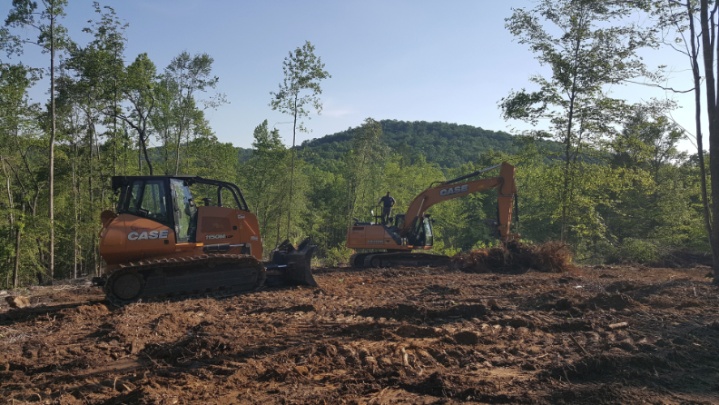
When a contractor starts to build a new house on new land, he has to first create a way to get in all the materials and equipment and people needed to build the house. The way in (or driveway) is the Gospel of Jesus Christ. Then the contractor has to remove all the stuff in the way of the new build including trees, stumps, rocks, shrubs, grass, the top soil and everything else he finds in the way of the new house. For us this might mean old habits that we want to change to be more like Jesus. Or old ways of thinking, attitudes, sins we like, people we follow, what we do and say, etc. This process is our becoming more like Jesus (sanctification).

If there is an old structure in the way it must be torn down to make way for the new one. A new foundation must be dug out, strong reinforced concrete walls must be formed before anyone can build above ground to create the place where a family will live. Walls, windows, doors, and a roof. These are all put into place as protectors of the people who will live in the house. These include spiritual formations that build us up in Christ; Bible reading, attending church, small group Bible study, service to people for the King and reaching out to others with the good news of the Gospel. 

We’re not talking about a renovation like what you might see on The Property Brothers or Fixer Upper or Island of Bryan or Mike Holmes (shows that I enjoy). It’s not about some new paint or move a wall or strengthening the floor or new cabinets or furnishings. What we’re taking about is a total demolition of the old person you were before coming to Christ and a new build into Christlikeness. 

But the fruit of the Spirit is love, joy, peace, patience, kindness, goodness, faithfulness, gentleness, self-control; against such things there is no law. Galatians 5:22 & 23

Be NEW in Christ!! 

Drift to Destruction

“People do not drift toward Holiness. Apart from grace-driven effort, people do not gravitate toward godliness, prayer, obedience to Scripture, faith, and delight in the Lord. We drift toward compromise and call it tolerance; we drift toward disobedience and call it freedom; we drift toward superstition and call it faith. We cherish the indiscipline of lost self-control and call it relaxation; we slouch toward prayerlessness and delude ourselves into thinking we have escaped legalism; we slide toward godlessness and convince ourselves we have been liberated.” D.A. Carson

The prophet Amos confronted the rulers of his day with some very savvy object lessons. He masterfully made points with pictures of locust, fire, fruit baskets, and my favorite – the plumb line.

A plumb line is a long cord, weighted with a bob. As masons erect tall buildings, the plumb line ensures that the walls do not drift away from vertical. The plumb line is absolute, and the bricks must align with it to stay straight, strong.

Amos preached to Israel several years before the Assyrian annihilation. This vision came to him: “The Lord was standing by a wall that had been built true to plumb, with a plumb line in his hand. And the LORD asked me, “What do you see, Amos?” “A plumb line,” I replied. Then the Lord said, “Look, I am setting a plumb line among my people Israel; I will spare them no longer .” (Amos 7:7-8)

Israel started out true to plumb with all the stability and strength that accompanies great craftsmanship. But now the wall leaned out of alignment becoming vulnerable to collapse. People, families, businesses, churches, and countries can drift dangerously away from plumb. Realign with God’s design and stay safe, and strong.

Dan Bolin
President
Refueling in Flight Ministries

Doer Means MORE Than Do

You’ve heard it before. You’ve maybe even said it to others. But have YOU taken theses words to heart?

James says, “But be doers of the word, and not hearers only, deceiving yourselves”. Becoming a doer, contains more than just the meaning of doing. Becoming a doer includes mean becoming being a poet, an artist, a maker, a carrier, a performer of the Word-a righteous act. Also note that it’s a verb and it requires action, not just mental ascent to the idea of becoming a doer. We all know Nike’s famous slogan, “Just do it!”. 

But, it’s not just about doing stuff. It’s about how we do it, why we do it. It’s about doing the right thing in the right way for the right purpose. 

  • Colossians 3:17 And whatever you do, in word or deed, do everything in the name of the Lord Jesus, giving thanks to God the Father through him.
  • Colossians 3:23-24 Whatever you do, work at it with all your heart, as working for the Lord, not for human masters, since you know that you will receive an inheritance from the Lord as a reward. It is the Lord Christ you are serving.
  • You shall love the Lord your God with all your heart and with all your soul and with all your might. Deuteronomy 6:5, Mark 12:30, Luke 10:27 & Matthew 22:37
  • Micah 6:8 He has told you, O man, what is good; and what does the Lord require of you but to do justice, and to love kindness, and to walk humbly with your God?
  • Galatians 6:9 And let us not grow weary of doing good, for in due season we will reap, if we do not give up.
  • I Thessalonians 5:15 See that no one repays anyone evil for evil, but always seek to do good to one another and to everyone.
  • James 1:19-25 – Know this, my beloved brothers: let every person be quick to hear, slow to speak, slow to anger; for the anger of man does not produce the righteousness of God. Therefore put away all filthiness and rampant wickedness and receive with meekness the implanted word, which is able to save your souls. But be doers of the word, and not hearers only, deceiving yourselves. For if anyone is a hearer of the word and not a doer, he is like a man who looks intently at his natural face in a mirror. For he looks at himself and goes away and at once forgets what he was like. But the one who looks into the perfect law, the law of liberty, and perseveres, being no hearer who forgets but a doer who acts, he will be blessed in his doing.

James continues to describe what the life of genuine, trusting, saving faith looks like. How do people who truly trust God the Father live from day to day? James makes it clear that those who trust God don’t merely become experts at listening to God’s Word. To believe is to act on what we hear.

As the previous verse stated, we are definitely called to accept the Word. We should accept it in our minds, and agree to it in our hearts. Those who believe, stop talking long enough to listen (James 1:19). They take the time to hear and understand. But the faithful don’t stop there. Faith in Christ is not just the map; it’s the actual journey. Merely nodding our heads at the Word is not enough—we need to do what the Word tells us to do. We need to figure out which way God wants us to go, and then actually go that way.

If we don’t, we demonstrate that we don’t truly trust the Father, at least not in that moment.

The Best of Times

Charles Dickens’ A Tale of Two Cities begins, “It was the best of times, it was the worst of times.” That certainly applies to the past few months. Friends have grumbled about being cooped up at home but also enjoyed uninterrupted family time. Some have complained about their loss of work but were happy to finish overdue home projects.

Life is filled with ups and downs; good days and bad days are often the same days! In the best of times we may feel confident and capable with no need for God. In the worst of times we may feel frustrated, angry, and alone. Where is God when we need him?

David knew a little about the highs and lows of life and God’s presence in both. He said, “If I go up to the heavens, you are there; if I make my bed in the depths, you are there.” (Psalm 139:8)

Life can never be so good that we do not need God. And life can never be so bad that He abandons us. His love flows from who He is and is not based upon our success or failure. Whether you are walking through the best or the worst of times, remember to stay close to God. His Word tells us He always stays near to us.

Dan Bolin
President
Refueling in Flight

Widji turns 51 & 90 in 2020

arcadia lodge
Arcadia Lodge, Mary Lake

Whether you spell it Widji or Widjii, did you know that Camp Widjiitiwin turns both 51 and 90 this year? Our history goes back to Muskoka Baptist Camp (now Muskoka Bible Centre) that was created in 1930 so that youth and young adults would have a place to hear the Word of God preached faithfully. That’s our 90th anniversary.

We also have a 51st anniversary because those campers from the early years grew up and MBC became a conference centre for families that in turn, started a youth camp in 1969. And it was then that Camp Widjiitiwin was created. Fifty-one is a good age to be!

The first home for Widji was across and down the river from our current site on the land of the former Arcadia Lodge (picture above at right). It was 4.5 acres of fun!

In 1973, a group of individuals provided funding to purchase the 26 acres of the current Camp Widjiitiwin. The dining and chapel hall consisted of three army tents joined together with a sand floor. The original cabins were built in 1979. The current Tub and Tubbette served as washrooms until the current ones were built in the 90’s and those building became staff accommodations. The Longhouse was built in 1984 and serves for both dining hall and chapel. (Side note, the main stove is from 1964, the dishwasher from 1978 and the original water heaters from 1976! WOW, they have served us well and are soon to be upgraded.)

The camp committee was inspired to name the camp Widjiitiwin because of the inclusive nature of Indigenous cultures in Canada, and to pay respect to the original inhabitants of the area where Camp Widjiitiwin is located. Widjiitiwin is an Anishinaabe (Ojibwa) word for fellowship.

In this, our 90th year, we had to cancel our summer on site programs and move them to online and camp-in-a-box in order to keep our ministry going and impacting the lives of camper, staff and partners. It was one of the hardest decision we have ever had to make. We were heart broken to have to tell 600 plus campers, 50 plus staff, Ignite partners, donors, alumni and camp pastors, that they would not be spending their summer at Widji. 

Psalm 127:1 says, “Unless the Lord builds the house, the builders labor in vain.” God has built this ministry and used many faithful available people to do it. He has sustained MBC/Widji over these 90 years and we pray He will continue to provide for us as we look forward to a great summer of camp in 2021. We ask and invite you to pray with and for us though this season of uncertainly.

Celebrate with us! – Camp Widjiitiwin – the way camp was meant to be… relational, central, natural, reaching out, a loving community focused on Christ. It’s like coming home! It’s my camp!

Highs, Lows and Plateaus

We’ve all gone through highs, lows and plateaus in our spiritual lives. Sometimes all in the same week. The highs of a well lead Bible study or an amazing service of praise to God or knowing you have had influence in someone becoming a Christian. The lows of pain or illness or hurt or injustice or the death of a loved one. And plateaus of just standing still, not growing, Bible on a shelf or ignoring God.

We need to set behind us the successes and the failures of the past so that we don’t dwell on our own actions, but rather on what Christ has done for us. We have not yet arrived and we need to press on to become more like Christ. 

Paul says it so well in Philippians 3:12-14 Not that I have already obtained this or am already perfect, but I press on to make it my own, because Christ Jesus has made me his own. Brothers, I do not consider that I have made it my own. But one thing I do: forgetting what lies behind and straining forward to what lies ahead, I press on toward the goal for the prize of the upward call of God in Christ Jesus. 

I heard it somewhere and have said it before that we have three stages on our seeking God. Discipline, desire and delight. 

  • My pastor Darrell said, “discipline is a momentum of habit“. It takes work. You need a plan. Life is SO busy that you can’t just happen into it. You need something that triggers a response in you. They say a habit takes 21 days to form. But you don’t want to! My friend Tim says, “it’s easier to act you way into a new way of feeling than feel your way into a new way of acting“. 
  • Delight yourself in the Lord, and he will give you the desires of your heart. This second step is more than discipline. We want to learn and grow
  • Desire comes less often for me. 

Wherever you are on that journey with Jesus, there’s room for growth! If the Apostle Paul had room for growth, so do we all. Keep growing in your faith in Jesus Christ! 

Your Role in the “One Another” Verses

Consider what God is requiring of you and me as we look at the “one another” passages in the Bible. Here is a quick summary: love, forgive, honour, live in harmony, do not deceive, encourage, be devoted, serve, agree, don’t judge, accept, greet, teach & admonish, be kind, patient, be compassionate, gentle & humble, do not slander, show hospitality, submit, speak with psalms, be at peace, do not deprive, wait for, do not lie, build up, live in peace, don’t grumble against, pray for, confess to.

You can’t have one another without another! Terry Dorey

You cannot grow spiritually unless you’re connected relationally. Why is community so important to your spiritual life? God designed us that way. He wants to use other people to grow us and he wants to use us to grow other people. Andy Stanley

These are all verbs, actions to be taken! Consider the following Bible verses:

Leviticus 19:11 Do not steal. Do not lie. Do not deceive one another.

John 13:34-35 A new command I give you: Love one another. As I have loved you, so you must love one another. By this all men will know that you are my disciples, if you love one another.

Romans 12:10 Be devoted to one another in brotherly love. Honour one another above yourselves.

Romans 12:16 Live in harmony with one another. Do not be proud, but be willing to associate with people of low position. Do not be conceited.

Romans 14:13 Therefore let us stop passing judgment on one another.

Romans 15:7 Accept one another, then, just as Christ accepted you, in order to bring praise to God.

Romans 15:14 I myself am convinced, my brothers, that you yourselves are full of goodness, complete in knowledge and competent to instruct one another.

Romans 16:16 Greet one another with a holy kiss.

I Corinthians 1:10 I appeal to you, brothers, in the name of our Lord Jesus Christ, that all of you agree with one another so that there may be no divisions among you and that you may be perfectly united in mind and thought.

Galatians 5:13 You, my brothers, were called to be free. But do not use your freedom to indulge the sinful nature; rather, serve one another in love.

Ephesians 4:2 Be completely humble and gentle; be patient, bearing with one another in love.

Ephesians 4:32 Be kind and compassionate to one another, forgiving each other, just as in Christ God forgave you.

Ephesians 5:19-20 Speak to one another with psalms, hymns and spiritual songs. Sing and make music in your heart to the Lord, always giving thanks to God the Father for everything, in the name of our Lord Jesus Christ.

Ephesians 5:21 Submit to one another out of reverence for Christ.

Colossians 3:12-17 Therefore, as God’s chosen people, holy and dearly loved, clothe yourselves with compassion, kindness, humility, gentleness and patience. Bear with each other and forgive whatever grievances you may have against one another. Forgive as the Lord forgave you. And over all these virtues put on love, which binds them all together in perfect unity. Let the peace of Christ rule in your hearts, since as members of one body you were called to peace. And be thankful. Let the word of Christ dwell in you richly as you teach and admonish one another with all wisdom, and as you sing psalms, hymns and spiritual songs with gratitude in your hearts to God. And whatever you do, whether in word or deed, do it all in the name of the Lord Jesus, giving thanks to God the Father through him.

1 Thessalonians 5:11 Therefore encourage one another and build each other up, just as in fact you are doing.

Hebrews 3:12-14 See to it, brothers, that none of you has a sinful, unbelieving heart that turns away from the living God. But encourage one another daily, as long as it is called Today, so that none of you may be hardened by sin’s deceitfulness. We have come to share in Christ if we hold firmly till the end the confidence we had at first.

Hebrews 10:19-25 Therefore, brothers, since we have confidence to enter the Most Holy Place by the blood of Jesus, by a new and living way opened for us through the curtain, that is, his body, and since we have a great priest over the house of God, let us draw near to God with a sincere heart in full assurance of faith, having our hearts sprinkled to cleanse us from a guilty conscience and having our bodies washed with pure water. Let us hold unswervingly to the hope we profess, for he who promised is faithful. And let us consider how we may spur one another on toward love and good deeds. Let us not give up meeting together, as some are in the habit of doing, but let us encourage one another–and all the more as you see the Day approaching.

James 4:11 Brothers, do not slander one another. Anyone who speaks against his brother or judges him speaks against the law and judges it. When you judge the law, you are not keeping it, but sitting in judgment on it.

1 Peter 4:7-9 The end of all things is near. Therefore be clear minded and self-controlled so that you can pray. Above all, love each other deeply, because love covers over a multitude of sins. Offer hospitality to one another without grumbling.

1 Peter 5:5 Young men, in the same way be submissive to those who are older. All of you, clothe yourselves with humility toward one another, because, “God opposes the proud but gives grace to the humble.”

1 John 3:11, 23; 4:7, 11 & 12; 2 John 1:5 This is the message you heard from the beginning: We should love one another.

Here are some practical steps for you and me;

Cain asked, “Am I my brother’s keeper?” and the answer for you and me is YES. We do bear responsibility to our fellow Christians as well as the world, the widows, orphans and the poor. Too often in our evangelical world we do not put feet to our words. Jesus said, “even as you have done it for the least of these, you have done it for me.”

We are the hands and feet of Jesus to a lost world. We have money, time, talents, gifts and abilities to give of ourselves. Time may be the hardest, but it can speak the loudest!

Again, these words are all verbs, actions to be taken!!! 

What to Pray When You Don’t Know What to Pray

What to pray when you don’t know what to pray. Honestly, it doesn’t matter. Just let it out to God. He understands. You can talk to God, yell at Him, cry, scream until you’re hoarse, argue (not usually successfully) or even be silent. He knows, He understands, He loves you!! 

Jesus has been through all we have (Hebrews 4:15 – For we do not have a high priest who is unable to sympathize with our weaknesses, but one who in every respect has been tempted as we are, yet without sin). 

Likewise the Spirit helps us in our weakness. For we do not know what to pray for as we ought, but the Spirit himself intercedes for us with groanings too deep for words. And he who searches hearts knows what is the mind of the Spirit, because the Spirit intercedes for the saints according to the will of God. Romans 8:26-27 

Jesus our intercessor, Hebrews 7:25 Therefore he is able to save completely those who come to God through him, because he always lives to intercede for them and 1 Timothy 2:5 For there is one God, and there is one mediator between God and men, the man Christ Jesus,

Revelation 8:4 The smoke of the incense, together with the prayers of God’s people, went up before God from the angel’s hand. 

Jesus wept” is famous as the shortest verse in the Bible (John 11:35), but the real power of that two-word passage from the story of Lazarus is the reassurance that Jesus understands what life is like for us. 

He doesn’t ask anything of us that He wasn’t willing to do Himself, and He promises to be with us in all we have to go through. Check out some of the things Jesus went through. Surely He can understand your pain, hurt, anger and frustration. Jesus knew

  • Temptation: “He was in the desert forty days, being tempted by Satan” (Mark 1:13, Luke 4:1).
  • Poverty & homelessness: “Foxes have holes and birds of the air have nests, but the Son of Man has no place to lay his head” (Matthew 8:20).
  • Frustration: “He scattered the coins of the money changers and overturned their tables.… ‘Get these out of here! How dare you turn my Father’s house into a market!’” (John 2:15-16).
  • Weariness: “Jesus, tired as he was from the journey, sat down by the well” (John 4:6).
  • Disappointment: “O Jerusalem, Jerusalem… how often I have longed to gather your children together, as a hen gathers her chicks… but you were not willing” (Luke 13:34).
  • Rejection: “From this time many of his disciples turned back and no longer followed him” (John 6:66).
  • Sorrow: “My soul is overwhelmed with sorrow to the point of death” (Matthew 26:38).
  • Ridicule: “Again and again they struck him…and spit on him. Falling on their knees, they paid [mocking] homage to him” (Mark 15:19, 14:65).
  • Loneliness: “My God, my God, why have you forsaken me?” He endured complete and utter separation from God so that you would never, ever, ever have to! (Matthew 27:46).
  • His family thought he was crazy (Matthew 12:46; Mark 3.21; John 7:5)
  • Abandonment: His best friends turned their back on him (Matthew 26:56)
  • One of his closest confidants sold him to be killed for pocket change (Matthew 26:46)
  • Death (John 11:1)
  • Gossip and slander (Matthew 12:24; John 8.52)
  • Suffering for righteousness’ sake (John 15:20)
  • Hunger (Mark 11:12 ff)
  • Criticism of his ministry (John 5:1; Matthew 12)
  • Mocking & rejected of His theology & message (John 5:1)

Finally, Hebrews 12:2-3 fixing our eyes on Jesus, the author and perfecter of faith, who for the joy set before Him endured the cross, despising the shame, and has sat down at the right hand of the throne of God. For consider Him who has endured such hostility by sinners against Himself, so that you will not grow weary and lose heart!!

In Jesus’ Name! What, Why & How…

Many Christians begin their prayers by addressing God the Father and conclude by ending with in Jesus’ name. This phrase “in Jesus’ name” isn’t some spiritual magical phrase like abracadabra or hocus pocus. And it doesn’t mean we will get everything we want just because we tack that phrase onto the end of our prayers. Further, it is not a signal to God that you are just about done praying. Jesus says that whatever you ask for in his name will be given to you (John 14:13-14). We usually learn this by the example of those around us as they pray out loud. 

In Matthew 6:9, Jesus teaches us in the sermon on the mount to pray through the Lord’s prayer, our Father who art in Heaven, hallowed be your name. I am not aware of anywhere in the Bible that Jesus prays to the Holy Spirit. That being said, the Father , the Son and the Spirit all together make up God. So, you could pray to any or all of them. 

By praying in Jesus’ name it is saying that we are praying in the way Jesus would pray if he was praying for what we are praying for. When you say, “In Jesus’ name,” you are saying, “I am asking for these things according to Jesus’ will, for his glory, and in his power.” As if Jesus Himself was praying our prayers.

“And whatever you do, in word or in deed, do everything in the name of the Lord Jesus, giving thanks to God the Father through him” (Colossians 3:17). In every activity, not just the spiritual ones, we should be able to say, “I am doing this in the name of the Lord Jesus.”

We may look like we’re doing things for and to others, but we’re actually doing things for and to him. We live for an audience of one. We serve the Lord Jesus Christ in every second of every day. Every single thing we do, every step we take, every word we utter should be thought of first and foremost as an offering to Jesus.

I have to say that I don’t always pray the way that Jesus would pray. You can add this caveat to your prayers of “if it is your will.” In older movies preachers often said, “if the Lord wills it” or “Lord willing”. This way, you can tell God what is heavy on your heart and weighs on your mind, but you are telling Him that you trust Him to make the best decision since you yourself do not know what is best. 

Praying “in Jesus’ name” is less about including the phrase at the end of your prayer, and more about positioning your heart properly when you pray. Praying in Jesus’ name means that you are conscious of two primary truths as you bring your requests to God; acknowledgment of His intercession and submission to His will. 

So, let’s stop praying with magical words by which we try to coerce God and manipulate Him to do what we want. Instead, become more aligned with Jesus’ will and pray for what and how He would want us to pray for. You can do it. I’ll be working on it too. 

Tips For Talking To Your Kids About Cancelled Summer Camp

Each summer when you pick up your campers from Widjiitiwin, they are busy getting their t-shirts signed by staff, saying goodbye to cabin leaders and new friends. There is an element of grief for what they are losing when they go home. Many are crying because they don’t want to leave. Camp has become a special place. 

Imagine waiting eleven and a half months to come back to camp only to find out that due to Covid-19 it has been cancelled. We recognize that for many of your children, camp is a high light of their summer. We expect that many of them will be upset at not getting to come to Widjiitiwin this summer. To that end we have complied a few resources to help you help them navigate this difficult time. If we can be any help, please reach out to us at registrar@mycamp.ca. 

Below is an excellent resource from ReformJudaism.org on helping campers deal with the loss of camp this summer (used with permission). 

When they’re uncomfortable or upset, kids need empathy more than anything else. Showing them that you feel for them and providing assurance that you will help them through this challenging time will often be all they need to get through times of uncertainty.

Supporting your children during this difficult time begins with understanding that everyone’s needs are different. Factors like age-specific maturity and whether or not they have been to camp before will affect how each child receives the news and can guide the way you tell them and comfort them. 

Parenting Roles Based on Your Child’s Age

For children of all ages, the greatest gift we can give as parents is to listen to them and provide validation. If you’re at all like me you need to resist the urge to “fix” the situation or problem-solve for them. It may leave children feeling unsupported and fear that you do not think they can manage things on their own.

  • For elementary school-aged children, be the director: You need a plan of what to say and how to say it. Anticipate what questions your children might have and what responses you might give.
    • Every time you have a conversation with your child about a difficult topic, you are helping your child to grow and learn, and with children of this age, parents need to be in charge and direct the conversation.
    •  
  • For middle school-aged children, be the tour guide: You need to lead but can also change course, depending on your child’s response and tolerance for the conversation.
    •  
  • For high school-aged children, be the torch-passer: More is less with this age, so share the information and then pass the torch to your children to let them lead the conversation while you listen.

How to Talk to Elementary School-Aged Children

It is helpful to remember that words are not always an elementary-aged child’s best friend, and children of this age cannot always express how they are feeling. Keep in mind that behavior is communication, and often, you can determine how a child is tolerating the information you’ve shared by watching their behavior both during and afterward – and then asking them about it without judgment. You might say:

  • “I notice you are stomping your feet a lot, and that isn’t like you.” 
  • “I see your eyes are tearing up, and I wonder if that means you are sad?”

The tone of your questions helps to assure your child that they are safe to share their feelings. It is fine to help your child label their feelings, if you feel confident that you are labeling those feelings correctly.

Be sure that once your child begins talking, you stop talking, giving them the opportunity to share what’s on their mind. Feel proud of yourself that you got your child to express their feelings!

Here are some things you might say to elementary school-age children who were planning to return to camp this summer or participate in other programs they’ve done in the past. We’ve left blank spaces where you would personalize your language to your family’s experiences and plans:

  • “It’s hard when you don’t get to do what you thought you’d be doing.”
  • “I’m so sorry that you won’t get to experience _____ because I know you love it.”
  • “I know you will miss _____, and I am always here to talk with you about it.”
  • “We will work together to fill your time this summer with activities that make you happy.”
  • “I know you’re sad, and I’ll do everything I can to help you to feel better.”
  • “It’s normal to feel sad about this; I am sad for you, too.”
  • “Everybody at _____ cares so much about everyone being safe and healthy, and this summer it will be too difficult to keep everyone safe.”
  • “We will keep talking about _____ because it’s so important to us and so we don’t forget all the wonderful things about it.”
  • “_____ is such a special place, and everyone is so disappointed because so many people love it and will miss it.”
  • “I know it doesn’t feel good, but I also know that there will be a time when you feel better.”
  • “It’s hard to imagine that this feeling will pass, and I hope you are OK.”
  • “This is such a loss, and I’m so sorry.”
  • “Sometimes when things are hard, it’s okay to give yourself permission to not think about it for a little bit. How about we don’t think about _____ not happening again until after dinner…?”

Here are some things you might say to elementary-aged children who would’ve been attending summer camp or other programs for the first time:

  • “I’m so sorry this won’t be the summer you get to experience _____.”
  • “I can’t imagine how you’re feeling, but I know you’re good at explaining it.”
  • “I do hope that you’ll be as excited in the future to try something new as you were about _____ for this summer.”
  • “We’re going to work together to come up with fun things for you to do this summer.”

How to Talk to Middle School-Aged Children

Teens need for information to be conveyed to them in an honest and frank manner. By allowing yourself to have a difficult conversation with your teen, you are strengthening your relationship with them, as well as their ability to work through conflict and challenge.

The conversation should be collaborative, with you sharing the information and then following the lead of your teen. Teens may be interested in talking about the situation all at once or may need time to process and then revisit.

Remember that behavior is communication, and often you can tell how your teen is tolerating the information you are sharing by watching their behavior both during and after the conversation. It’s important to remember, too, that teens often need time and space in order to fully engage in a conversation after receiving difficult information.

At this age, peer relationships are also very important, and your teens may want to talk with their friends before they talk with you. You can help support their camp/program friendships – in the time they need them most – by suggesting they connect with their friends to talk about the situation.

Some statements that might be helpful are:

  • “Hey, I see that you’re really sad right now. I know you may not want to talk about it, but I’m here for you when and if you do want to talk.”
  • “I know you may want to talk with your friends first, but let me know if you want to chat with me about _____ later.”

The tone of your question can help assure your teen that they are safe to share their feelings. Acknowledge that this is a grieving process for your teen and validate the emotions that they are experiencing. It may be helpful to avoid using words like “I understand” and instead use statements such as “I can imagine…” or “It sounds like…”.

Here are some things you might say to middle and high school-aged children:

  • “I know how much you were looking forward to returning to _____. Are there things we can do at home that will be helpful to you during this time?” (Note: It may be helpful to ask your teen what their favorite camp/program activities are and ways in which these might be able to be recreated virtually.)
  • “_____’s biggest concern is always your health and safety, and in this time, they’re not able to provide that same safe environment they they would normally because of COVID-19.”
  • “It is so normal to be upset and experience a lot of emotions around this news. I’m here to talk about it anytime you need.”
  • “_____ has been doing a lot of virtual programming in the last several months; I bet they are going to come up with all kinds of ways for you to stay connected to your friends this summer. I know this won’t be the same for you, but maybe there will be some new types of activities for you to experience.”
  • “There will be opportunities for you to talk with and hear directly from the _____’s directors about this decision and plans for moving forward.” (Note: If your child has specific questions for camp/program leadership, it might be helpful to have them write these down.)