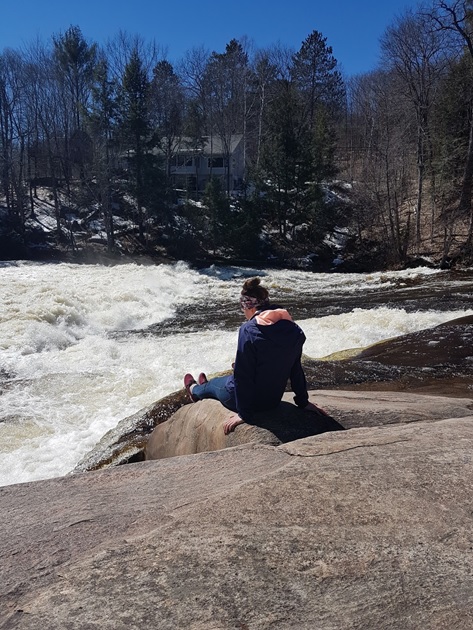
38 Days – A Moose Update

As most of you know, I (Moose) have been on sick leave this summer from camp as a result of health issues (dizziness that had become debilitating over the spring months).

As of today, I am 38 days without dizziness. This hasn’t happened since in probably two years. However, my energy and stamina are still lower than I would like, which I find frustrating as I want to be doing more, including getting back to camp.

It has been SO strange not to be at Widji this summer. The goal is for me to have the time required to heal. While I don’t have a set date for returning to camp, I will do that as soon as I am healthy and able. 

I had an appointment with my specialist in Barrie last Tuesday. He is happy with my progress and I don’t see him again until October. I have also had some medication changes that have contributed to my healing. 

I very much appreciate the cards, emails an calls! Your continued prayer is treasured.

Moose

Oh Bother

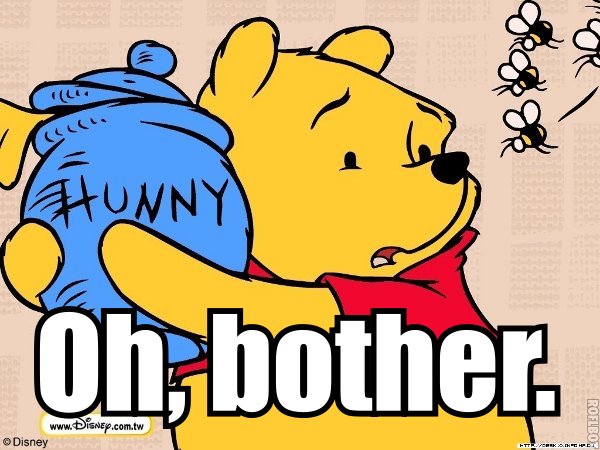
What’s the word or phrase that you say SO often that people notice and comment about? My wife pointed out recently that I’m saying “oh bother” a lot recently. I don’t mean to be quoting Winnie the Pooh, it just comes out. I don’t really know why. A number of years ago it was the word, “indeed”. I think I picked it up from Teal’c on Stargate SG1. And if I need a random number, you can bet it will be 87. 

Things others say often: the reality is, folks, true/false, Yikes, that’s a good option, super-fantastic, I’m just sure, Safety first, it’s gonna be okay, sounds good!, Make it a great day or not the choice is yours., Good heavens or You dear soul!, In a minute, but not right now, Is this a you problem or a me problem? Are you being a problem solver or a problem bringer?, It’ll be great, Do what you think is right” or “is it adding or distracting from the camper’s experience?, It’s a great day to change lives, Hey y’all!, Teamwork makes the dream work, “there’s a method to my madness”. 

What words should be marking our lives? Surely words that demonstrate our character. Consider these verses:

  • Let the words of my mouth and the meditation of my heart be acceptable in your sight, O Lord, my rock and my redeemer. Psalm 19:14, ESV
  • Too much talk leads to sin. Be sensible and keep your mouth shut. Proverbs 10:19, NLT
  • Whoever belittles his neighbor lacks sense, but a man of understanding remains silent. Proverbs 11:12, ESV
  • Whoever guards his mouth preserves his life; he who opens wide his lips comes to ruin. Proverbs 13:3, ESV
  • A soft answer turns away wrath, but a harsh word stirs up anger. The tongue of the wise commends knowledge, but the mouths of fools pour out folly. Proverbs 15:1-2, ESV
  • From a wise mind comes wise speech; the words of the wise are persuasive. Kind words are like honey – sweet to the soul and healthy for the body. Proverbs 16:23-24, NLT
  • Death and life are in the power of the tongue, and those who love it will eat its fruits. Proverbs 18:21, ESV
  • Whoever keeps his mouth and his tongue keeps himself out of trouble. Proverbs 21:23, ESV
  • A word fitly spoken is like apples of gold in a setting of silver. Proverbs 25:11, ESV
  • I tell you, on the day of judgment people will give account for every careless word they speak. For by your words you will be justified, and by your words you will be condemned. Matthew 12:36-37, ESV
  • The good person out of the good treasure of his heart produces good, and the evil person out of his evil treasure produces evil, for out of the abundance of the heart his mouth speaks. Luke 6:45, ESV
  • Let no corrupting talk come out of your mouths, but only such as is good for building up, as fits the occasion, that it may give grace to those who hear. Ephesians 4:29, ESV
  • But now you must put them all away: anger, wrath, malice, slander, and obscene talk from your mouth. Colossians 3:8, ESV
  • Let your speech always be gracious, seasoned with salt, so that you may know how you ought to answer each person. Colossians 4:6, ESV
  • If you want to enjoy life and see many happy days, keep your tongue from speaking evil and your lips from telling lies. Turn away from evil and do good. Search for peace, and work to maintain it. 1 Peter 3:11, NLT
  • If you claim to be religious but don’t control your tongue, you are fooling yourself, and your religion is worthless. James 1:26, NLT
  • In the same way, the tongue is a small thing that makes grand speeches. But a tiny spark can set a great forest on fire. James 3:5, NLT

What King Arthur can Teach us about Leadership!

round-table

What could we learn about virtue, honour and leadership if we looked to the founder of The Round Table as an example of practical and chivalrous action in the modern world?

Arthurian literature is filled with rich metaphors regarding the nature of ethics, honour and humanity. Embodying the ideals of bravery, courtesy and loyalty, King Arthur is perhaps the most influential secular role model in Western philosophy.

  • Leadership beside each other
  • Collaborative conversations
  • Equal standing at the table and court, common ground
  • See and be seen easier than at a long table, the king is not elevated on a dais above his knights, they were face to face, no one hiding behind another
  • A table where everyone’s ideas were important, debated and judged equally on their merit – not based on who they came from.
  • Get synergy/energy from each other
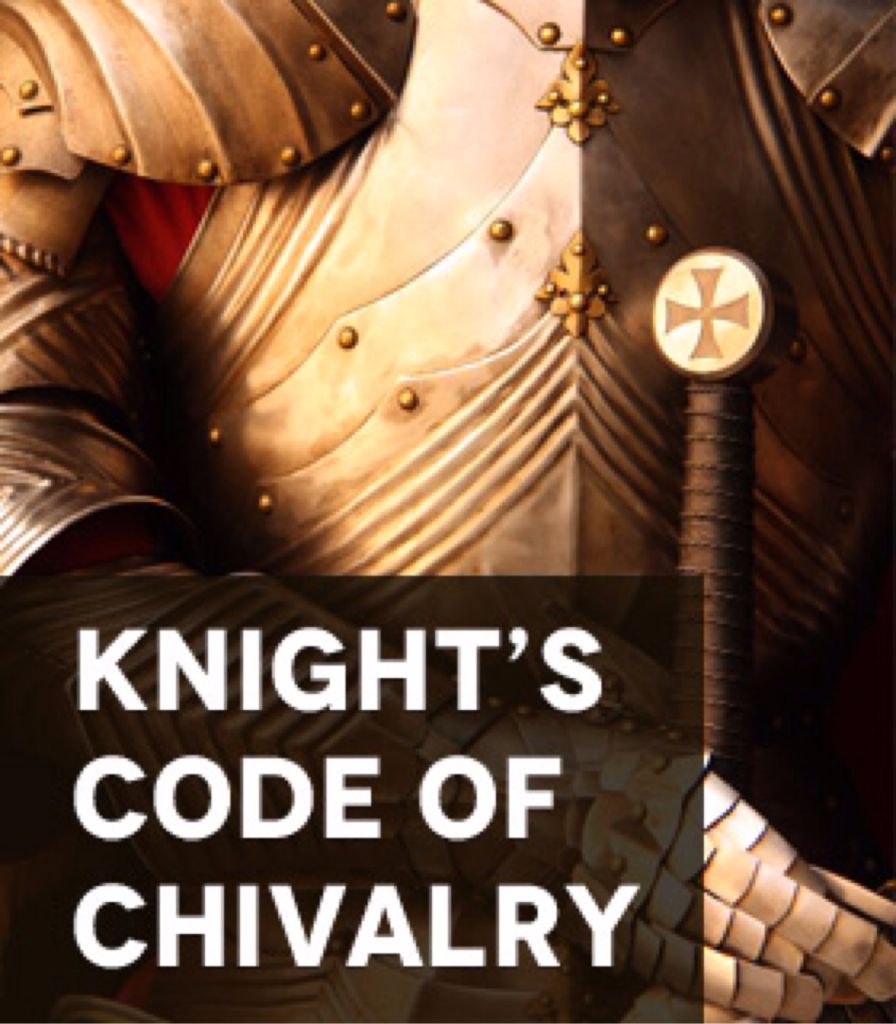
  • Code of Chivalry

The leader sets the example by setting aside the trappings of leadership and setting the stage for collaboration.  Engage the heart. Be tough and take the hit when it would be easier to fudge and slide by. Be chivalrous, bold and stand for what’s right.

Arthur’s table was a significant innovation: Rather than issue proclamations from the end of a long table, a round shape brought him closer to his court and facilitated collaboration. Arthur’s table also allowed him to easily call on his knights’ particular expertise at the precise moment he wanted it.

Collaboration

King Arthur used a Round Table where each Knight could engage anyone in conversation. This simple change sent a strong message. We are all equals at this table. Like Arthur, today’s successful leaders understand that communication and collaboration must be fostered and that the decision-making process must be opened to anyone who can offer insight and wisdom. “None of us is as smart as all of us”. Ken Blanchard.  No one ever succeeds alone.

Round table leadership is creative, motivating and engaging. Building broad buy-in, engenders a sense of team work that excites constituents both internally and externally. Of course, someone has to ultimately make a decision, but the round table style leader has involved his team so it has become “our decision” and a shared goal.

Training and mastery of skills

The serious games of today need to focus on a different set of skills from King Arthur’s time, but they involve skills that are no less critical: leadership, negotiation, team work, confronting problems, public speaking, improvisation, persuasion, decision making with incomplete information, and remaining calm under pressure. 1 Chronicles 12:2 David’s mighty men they were armed with bows and were able to shoot arrows or to sling stones right-handed or left-handed.

Round Table leadership says:

  • I’m going to surround myself with the best and the brightest and we’re going to make a big difference – together.
  • I’m going to recruit those that are strong where I’m weak so that together we’re positioned to take on any challenge.
  • We’re going to discuss ideas and solutions not worry about org charts.

Sources

  • King Arthur’s Round Table: How Collaborative Conversations Create Smart Organizations by David Perkins
  • Leadership Lessons From King Arthur by Mike Brokloff FACHE
  • The CEO and the Holy Grail: What King Arthur Can Teach Us About Training Leaders by: Stephen Balzac
  • Leadership Secrets: From The Round Table For The Multi-Site by Joclyn Kostner
  • 12 Rules of the Knights of the Round Table by Ashlin Shuttlesworth
  • The Round Table as a Leadership Style – King Arthur was on to something by Nicole S. McWhorter

The Ultimate Guide to Amazing Devotions

Even I have to admit that the title of this blog is quite a claim. And that’s true. But hopefully it caught your attention enough to read further. I hope you will find some insight to help your walk with Jesus.

So, here’s my list:

  1. Do them. It seems like a simple idea, but sometimes you just need to do it. Even when you don’t feel like it or want to.
  2. Discipline, desire, delight; are our stages of our seeking God. It takes work. You need a plan. Life is SO busy that you can’t just happen into it. You need something that triggers a response in you. But you don’t want to – it’s easier to act you way into a new way of feeling than feel your way into a new way of acting.
  3. Read your Bible, meditate/contemplate & pray. It’s not a mystic experience, it’s practical. Think about what you have read, what you can learn from it, what you need to do or change as a result of it and what did it mean to the original readers, in fact who were they?
  4. As often and regularly as you can. Discipline is a momentum of habit. The more you do it the easier it becomes to do it regularly.
  5. Find the best time of day for you. Not everyone is a morning person. If you decide to go with evening devos, make sure you connect with God in the morning and during the day. 
  6. Pray throughout the your day. 1 Thessalonians 5:16-18 Always be joyful. Never stop praying. Be thankful in all circumstances, for this is God’s will for you who belong to Christ Jesus. (NLT)
  7. Get the whole story.
    • Lots of people, even marketers, know David killed Goliath with a rock. How did God prepare David for that moment, who else was involved and where did God lead David after that. 
    • Jonah got swallowed by a big fish. So what? What was he doing in it, where did he end up, did he do want God intended?
  8. Are you a new Christian? Start in the book of Mark. It reads easy and allows you to quickly get acquainted with the people of the New Testament. From there move to Matthew and Luke. The Gospel of John and Romans have great doctrine but that’s often too hard to start with. Make sure you take in some Old Testament like Psalms and Proverbs.
  9. The Bible is the story of God through the history of the Israelites. Stories are connected from the old to the new testament. Find out which ones and read the ask story. When Jesus says, the scriptures say… go and read the whole section, not just a couple verses.
    • And stories are tied to Psalms that expresses the grief or hurt or pleasure from the story. David and other cried out to God in pain, joy and anger. You can too.
    • Feeling down, go read about Elijah. He was seriously depressed, yet God cared deeply for him and looked after him.
  10. Ask questions. Find and older person who can mentor you in your Bible study. You’ll both learn more.
  11. Last, make sure you use a translation of the Bible you can read. The New Living Translation reads well. The New International Version does too. The English Standard Version is a good literal translation, while the Message helps bring the meaning into modern language. As you progress consider a study Bible to help connect the old and new testaments and learn about the history of the people each book was written to and for. 

Summer Leadership Team 2017

Every summer it is my pleasure to work with a summer leadership team of 18-25 year old staff. Summer camp is one of the very few industries where we entrust our operations to 18 to 20-something leaders and 15-17 year old staff. BUT, what a great time to be learning and practicing their leadership skills and abilities.

I like being a leader, I like teaching the next generation of leaders and helping them discover their potential. I like working alongside people to create a greater good. To be able to give them opportunities to try out their leadership abilities and even the chance to “fail with dignity” is a great privilege. I want them to become leaders not just at camp, but in their youth groups, sports clubs, schools, homes, communities and more.

Meet the team for 2017! 

  • Heyoo – Interim Director
  • Giggz – Co-Program Director
  • Colgate – Camp Admin and interning at Widji for a year
  • Pony – SALT Director
  • Shogun – Waterfront Director
  • Rhino – Medic/Girl’s Chief 
  • Tut – Guy’s Chief 
  • Butterz – Ropes/Sports Area Head
  • Daisy – Head Cook
  • Titan – Assistant Program Director
  • Cebue – Girl’s Chief 

Please pray for this team that they will have unity, energy and renewed faith. 

Good-bye, July

Guest Blog by Colgate

By the time I came to the realization that camp had started, it was already half over. Four weeks of kids have come and gone, the fifth week in full swing. As I sit in my office and write this, I am beginning to understand that the cliche “time flies” holds far too much truth. The summer is half over, and I honestly don’t know whether or not I have had any influence on the lives of either staff or campers. But that’s the nature of camp.

Each moment is hectic, packed with adventure, a constant hum of chatter in the air. With hardly a moment to take it all in, the day, week, month, is over, and there’s no getting it back. It truly is a time of trusting that God is using you for the glory of His kingdom! This may sound like a recipe for disastrous burnout: insufficient sleep, perpetual noise, energetic children, and copious amounts of caffeine (in various forms), but it can also result in renewed faith in God for staff and campers alike.

Ten weeks of camp may sound unsustainable to some, and it definitely can be, but dependence on Christ can radically turn a person from hopelessness to the anticipation of better days. Burnout happens when a person doesn’t make it a priority to fully process each day and spend time in communion with God. Yes, it is difficult to find or make time for that, and yes, it is difficult to process that much information, and yes, the end of camp may leave you in a state of withdrawal. You will miss every chaotic circumstance you found yourself in, so take time to cherish every bit of it.

Today, the final day of July, the middle of summer, the halfway point for most of the staff, I realize that I have not been doing that. I have been chugging too much coffee, sending too many emails, and putting too much effort into cabin lists. At the end of this month, I can say that I helped bring kids to camp, but I did I really know any of them? July has flown by, a whirlwind of fun and adventure, but did I make each moment count? Did I form meaningful relationships with campers? Did I encourage the staff like I should have? Did I do enough? My instinct says no.

There is always more I can do, more I can say, more I can give, until there isn’t. Camp is busy, but making time to take it all in is what truly makes it count. I’m not here to be an administrative machine (although some days I’d like to be); I’m here to help change lives. I want to be a catalyst for change, somebody who pours God’s love into others and is sure to be filled herself. It will be demanding and tiring, but I believe that it is the reason I’m here. I want to bring glory to God, not to myself. Half of the summer has come and gone, but the other half is my second chance, my time to make it count.

So with that, good-bye, July, and hello August!

Colgate

The Leadership Chair

Sitting in the leadership chair is one thing. Accepting the responsibility that goes with the chair is something else. 

It’s easy to think you’ve got all the answers when none of the ultimate responsibility lies with you. But sitting in this chair. Until you sit in this chair, you don’t know anything. You can’t know. Vice-president Daniels on 24

The first year of the transition from summer staff to leadership staff brings with it a lot of changes. Here are some of the things we talk about as they make that transition. 

  • You will be misunderstood this summer! People who were peers last year, you may have to lead this summer. Further, with your new responsibilities will come some new freedoms that others do not get. 
  • We name the names. If there is an issue with a staff member or camper, we will identify them so all leadership who need to know are in the know. 
  • See beyond the current situation. Try to see what the logical outcome or consequence of the action or idea will be. Use the risk management grid to help you. 
  • Risk management: safety is always first. This includes mental, physical, social and emotional safety. Decisions must be run through a grid to determine their safety. There is an interview question about this at every level of camp staff. Safety is always the most important responsibility. 
  • As leadership staff, we minister to & support the staff as they support and minister to the campers. This is a change in focus from being solely focused on the campers. As we serve our staff they will serve the campers, therefore we must serve our staff well. 
  • We set the example, the tone and demonstrate the culture of camp! As we go, so will the other staff go. That means we must be the first to obey the rules, wear our PPE, go to chapel, etc. 
  • Leaders eat last. This last long been my habit to make sure that campers and staff all get their firsts before I sit down to eat. On occasion, it means missing out on something. 
  • Problem solving – who’s got the monkey? I’m not always going to solve your problem for you. This sometimes comes as a surprise for staff who have always looked to others for the answers they seek. I want my summer leaders to learn to solve problems. 
  • When I teach our SALTers, I talk about trying new things and “failing with dignity“. I get to help young leaders to test our their leadership metal. The same goes with summer leadership staff. They don’t always get it right the first time. That’s okay. We all need to learn and 
  • Always ASK: adults are asked, children are told, and idiots are made. People will usually rise to the level of expectation you give them, so set high expectations and watch them excel. 
  • Spiritual development of staff isn’t just for the chiefs. We all bear a responsibility to lead and guide our staff to maturity in Jesus. 

Camp Pastors 2017

Every summer at Widjiitiwin we have an excellent group of summer camp pastors who each give a week of their time to be at camp to teach the Bible to campers and staff. We highly value the time these men invest into teaching God’s Word, the staff and campers.

Our camp pastors for #Widji17 are:

  • Escape Camp – Hughson Staff
  • TNT 1 & Blast 1 – Chipstack
  • TNT 2 & Blast 2 – Ice
  • Fresh Air Camp –Joose
  • Royal City Camp – Newb
  • TNT 3 & Blast 3 – Boyardee
  • Venture Camp – Nemo & Sad Sac
  • Sizzle – Sherlock
  • Ephraim’s Place – Optimus Prime

This summer we welcome all our camp pastors and their families! Please pray for these men as they pray, prepare and give their time to impact the Kingdom of God at Widjiitiwin.

Camp Widjiitiwin – the way camp was meant to be… relational, central, natural, reaching out, a loving community focused on Christ. It’s like coming home. It’s my camp!

HOW did I get HERE?

Hello! I’m Maddy, but at camp I’m known as GiggZ. I got my name because I was and maybe still am known for my excessive amounts of laughter. This year I am the Program Director and that’s amazing but super strange. As I kid I was a camper at Widjiitiwin and looked up to staff and leadership as if they were heroes, but now that I’m here I’m not sure what all the fuss was about.

When I looked back at all the things that got me here to this position the list gets a little lankly. My family first heard about camp about 9 summers ago over the Christian radio station 100.3 and from there my mom signed my brother and I up! I still remember my first day at camp, I wasn’t homesick but I remember thinking ‘where on earth did my parents leave me’. Later I would realize camp would become my home.

My first cabin leaders were Siren and Synchro and they truly made my first week at camp memorable! That first week I also met one of my closest camp friends, Meredith. After that summer Meredith and I were in the same cabin again but by total ‘coincidence’ (all because of God) and ever summer after we went to camp together right up to our first year as staff.

As a camper I did a couple years of Blast, then a summer of Sizzle and then I did the SALT program in 2012. There I learned that ‘hey I’m a bit of a leader’ but I also learned about my weaknesses and strengths. The summer after SALT I applied for a position at camp and was hired for service staff. The summer after that I was a cabin leader and last summer I was a SALT cabin leader. Each summer I’ve learned so much, from my mistakes, and from my successes. Over the years, I have learned so much from different staff members, leadership, and even campers! I truly believe that I wouldn’t be who I am or where I am if it wasn’t for this camp.

During my last year of high school, I was also given the privilege of working for a local church and being there after school program director, there I was given the responsibility of planning, as well as running 3 after-school programs with the support of the church. Looking back, I can see exactly how God was preparing me for these different jobs and I know that God is still along side me pushing me on. I must be confident in my abilities because I know that he has been preparing me and supporting me all long my journey thus far.

And lastly my parents! Shout out to the most amazing and support people ever! They have supported me in my decision to come to camp and they are the ones I turn to and rely on when things go sideways. They inspire me to work hard and to be a better leader everyday. They both have amazing leadership abilities and I know I couldn’t and probably wouldn’t want to be here if it wasn’t for them.

So there you have it, somehow the little shy camper in Robin cabin is now the Program Director.

GiggZ

Why We Do Camp Names @ Widji

Why do we have camp names at Widjiitiwin? Because they’re magical!

It adds to the magic of camp and creates a space not only for the campers but also for the staff to have the opportunity to be the people they can’t be outside of camp. There’s nothing like hearing a camper yell “Moose!” when they see you away from camp! It’s something special between you, the staff and your campers and brings back memories for all of you!

One of the things you’ll notice right away is that camp staff go by camp names rather than their given name. We want our campers to know that they have entered a new community, where new things can be tried, new friends made, new skills gained, and new outlooks developed. They can become the person they want to be. Camp names are a fun way for us to build that magic, that sense of possibility.

Your camp name will become your super hero uniform, allowing you to achieve incredible levels of GR8ness! I find it gives a person the freedom to explore to find who their true selves actually are by stepping out of their name. Camp names for us are about freedom to be yourself not hiding or masking yourself. Many folks go through several camp names before they find a fit, which in turn helps them discover the person behind the real name.

The Ceremony: Staff with camp names sit in a circle on benches while those yet to be named sit inside the circle on the floor. As each staff receives their camp name they write their name in the book of staff names (choosing how to spell it). Then they come and join the named staff on the benches. 

Rules for Approving Camp Names @ Widji

  1. The namee must like their name. They get one veto.
  2. The Camp Director gets final say and unlimited vetoes.
  3. If a staff comes with a camp name from another camp, and wants to keep it, they can. If they desire a new camp name, that is okay too. 
  4. The camp name mustn’t be a proper name (Bill or Jennie).
  5. The name must be original to the camp – no repeats.
  6. The name must pass the test where a camp name is tried out to see if there was a way that kids could make it dirty.
  7. The name could make reference to your skills but not your physical appearance.
  8. Camp names should bolster people’s self-esteem and make them feel part of the community.
  9. The name must not scare parents away – no Killer, no Psycho, no LovesToHug.
  10. Camp names are an honour and are earned by your commitment to the community.