Anatomy of Our Summer Camp

Summer camp is often thought of as a whole, a single place where campers convene for several weeks each summer. Few think of summer camp in the context of its smaller parts.  Yet, for campers, the special memories that make up “summer camp” in their minds are not merely the product of a whole, but a collection of memories related to its various parts.  The overall experience of summer camp not only comprises a special place in the heart of campers, but the memories connected to favorite spots on campus.  What are these parts, and why would do campers find them so dear?  They’re places that, without, summer camp just wouldn’t be summer camp.

Cabins & Bunks: What they have in common is that they are private spaces that a handful of campers at each camp have in common.  They live in their bunks, sleep in their bunks, and attend activities with their cabin mates.  Every cabin has its own playlist, inside jokes, special nicknames for each other, and unique games that it enjoys. And campers leave their mark by signing their name for future campers and future generations of campers. We have had a mom show her daughter where she slept in the same cabin when she was a girl. A very cool memory at Widji! 

Dining Hall: At home, the dining hall is just a place for campers to eat or maybe even a place where parents host special guests. But at camp, it’s such an important place that it’s spelled with capital letters.  The camp dining hall is not only a place where the camp convenes for meals, but a place full of song and cheer and mail call and silly announcements.

The River: The river is the hub of our summer camp waterfront.  It’s the place where campers go to swim, blob, fish, canoe, and socialize. It’s so special that, at most camps, every camper goes there at least once a day. Lots of friendships are formed and memories are made on the docks and sand of the camp waterfront.

Campfire: Every camp has a special place where the entire camp convenes in the morning and/or evening to officially kick off or end the day.  This is where sports and competition wins are celebrated and special occasions are marked, and each camp does something just a little bit different to inflict personality into its assembly location to make it a memorable place for campers.

Longhouse: This is another building that goes by a different name from camp to camp, but is home to memories of camp shows, sing-alongs, all camp games, challenges, indoor campfires, evening activities, and just about a million other activities. For all intents and purposes, it’s camp’s all-purpose building, the place where the entire camp gathers to celebrate activities that are as indispensable to the camp experience as to the camp itself.

Activities: from the waterfront to high ropes to beach volleyball, the climbing wall, canoeing, archery and so MANY more, these are the places campers make memories and friendships, learn skills and life lessons like challenging yourself, pursuing getting better, leadership and being better. 

Traditions: a camp is not just defined by the places around camp, but be the people and traditions that carry over for years. Check out these Widji blogs about our traditions & culture – blog 1, blog 2, blog 3 and blog 4.

Of course, as merely building and places, these locations make up just a fraction of summer camp. But they’re so full of literally decades of memories that the spirit of the camp emanates from them, and every camper has a nearly endless list of memories that involve them. Not just summer camp, but the anatomy of it is essential to the summer camp in the making of camp memories that last a lifetime.

May Truth & Grace Reside Here

May truth and grace reside hereThis quote is from a Hallmark Christmas movie, Engaging Father Christmas. They unearth this phrase from beneath wallpaper and discover the roots of the family who owned the cottage. I confess that my wife and I watch a LOT of Hallmark movies leading up to Christmas. There’s always a good message to them. I was intrigued by the statement found above the doorway pictured to the right. 

Truth is the property of being in accord with fact or reality. Truth matters, both to us as individuals and to society as a whole. As individuals, being truthful means that we can grow and mature, learning from our mistakes. Absolute truth is something that is true at all times and in all places. It is something that is always true no matter what the circumstances. It is a fact that cannot be changed. Malachi 3:6 says, “God is always the same yesterday, today and tomorrow. He never changes. He is so faithful, so constant, so loving and so true!” 

Grace is undeserved, unmerited, unearned favour – that means nothing you can do can ever make God love you more, and nothing you do can make Him love. John 3:16 says, “For God so loved the world that he gave his one and only Son, that whoever believes in him shall not perish but have eternal life.” And Romans 5:8, But God demonstrates his own love for us in this: While we were still sinners, Christ died for us. 

And the Word became flesh and dwelt among us, and we have seen his glory, glory as of the only Son from the Father, full of grace and truthJohn 1:14

We need truth. We need grace. We need Jesus. Only Jesus Christ lived in perfect grace and perfect truth. Only Jesus Christ can save hard-hearted, hard-headed sinners full of lies and deserving judgment. 

Add too this verse in the Christmas carol, Joy to the World, whose sacred words were inspired by Psalm 98 by Isaac Watts. 

He rules the world with truth and grace,
And makes the nations prove
The glories of His righteousness,
And wonders of His love,
And wonders, wonders, of His love.

What about you and your house? Do grace and truth reside there? What can you do today to make it more so? 

May the grace of the Lord Jesus Christ, the love of God, and the fellowship of the Holy Spirit be with you all. 2 Corinthians 13:14

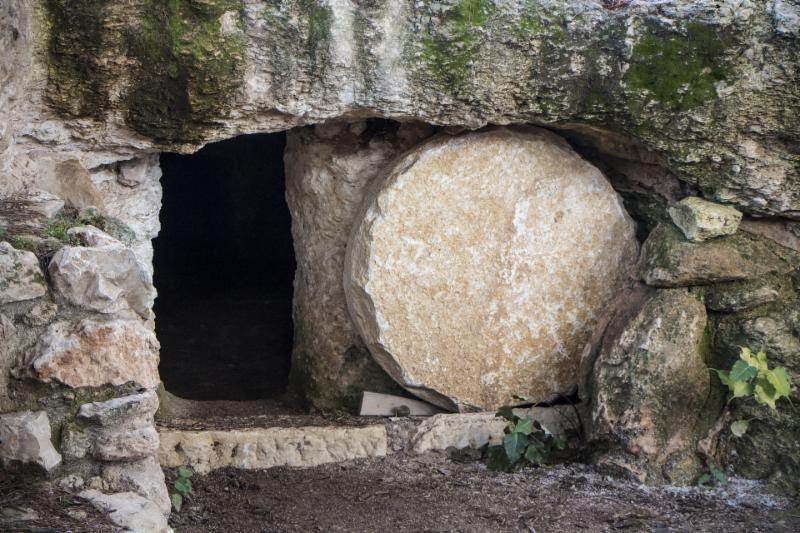
Easter – He is Risen

Back at Christmas in my Advent blog, I said, “We can’t leave the Advent season without a reminder that the story doesn’t end at Christmas. We know that in Jesus’ life on earth that Christmas leads to Easter, to His death on the cross. ” This is the next part of that story. 

The victory of Easter was secure. Jesus had triumphed over sin and death. The grave had failed to retain its prey.

But Peter fretted, still haunted by his betrayal and failure. Unaccustomed to waiting, as he had been instructed, he announced, “I’m going fishing.” And several other disciples followed suit. They fished all night and caught nothing. Then Jesus showed up. And, as he had three years earlier, He directed Peter and his crew to a massive catch of fish – 153 to be exact (John 21:11).

But Jesus had not endured the pain of the cross to allow guilt, past failures, and impatience to diminish His victory’s impact in Peter’s life. In the pointed, painful, and powerful conversation that followed, Jesus restored His relationship with Peter, and challenged him to significant leadership responsibility within the infant church. Jesus concluded their talk and called Peter to the heart of the matter: “Then he (Jesus) said to him (Peter), “Follow me!’” (John 21:19). 

On Christmas, Christ lovingly set his foot on earth. On Good Friday, Satan struck His heel. But Satan’s temporary victory didn’t last long. The events of Easter turned the tables, proclaiming God’s ultimate victory.

This Easter season, remember, all our guilt, pain, and losses are merely Satan’s Pyrrhic victories. Christ alone wins the war. This Easter, say with Paul, “But thanks be to God, who gives us the victory through our Lord Jesus Christ.” 1 Corinthians 15:57.

Don’t allow a painful past or an impatient present, to diminish the power of Easter. Don’t return to the familiar and comfortable distractions that will rob you of the opportunity to follow Jesus and apply the victory of Easter in the days ahead.

Some parts borrowed from Dan Bolin, President, Refueling in Flight Ministries.

The Heavens Declare!!

The heavens declare the glory of God; the skies proclaim the work of his hands. Psalm 19:1The Heavens Declare!!

The heavens declare the glory of God; the skies proclaim the work of his hands. Psalm 19:1 This has long been one of my favourite Psalms. Don’t miss verse 13. 

This is one of the clearest biblical statements that nature itself is meant to show the greatness of God. These words are in the present tense. That is, the heavens “are declaring,” and the sky “is proclaiming” the creative work of God. It’s a continual display. What we see in nature is meant to constantly show us that God exists and tell us how amazing a Creator He truly is. 

Romans 1 also ties into this idea. God has revealed enough of Himself in nature that nobody has an excuse for rejecting Him or for doing what is wrong. “For since the creation of the world His invisible attributes, His eternal power and divine nature, have been clearly seen, being understood through what has been made, so that they are without excuse.” (Romans 1:20). The heavens declare the glory of God. 

God reveals Himself in nature so that no one will be able to plead ignorance of His existence on the last day. His message gets through, and we can appeal to creation as proof of His existence when we are talking with unbelievers.

Romans 1:20 For his invisible attributes, namely, his eternal power and divine nature, have been clearly perceived, ever since the creation of the world, in the things that have been made. So they are without excuse. 

Genesis 1:1 In the beginning, God created the heavens and the earth. 

Genesis 1:14-16 And God said, “Let there be lights in the vault of the sky to separate the day from the night, and let them serve as signs to mark sacred times, and days and years, and let them be lights in the vault of the sky to give light on the earth.” And it was so. God made two great lights—the greater light to govern the day and the lesser light to govern the night. He also made the stars. 

Amos 5:8 He who made the Pleiades and Orion, and turns deep darkness into the morning and darkens the day into night, who calls for the waters of the sea and pours them out on the surface of the earth, the Lord is his name;

Isaiah 44:24 Thus says the Lord, your Redeemer, who formed you from the womb: “I am the Lord, who made all things, who alone stretched out the heavens, who spread out the earth by myself,

Isaiah 40:26 Lift up your eyes on high and see: who created these? He who brings out their host by number, calling them all by name, by the greatness of his might, and because he is strong in power not one is missing.

Psalm 8:3 When I look at your heavens, the work of your fingers, the moon and the stars, which you have set in place.

Nehemiah 9:6 “You are the Lord, you alone. You have made heaven, the heaven of heavens, with all their host, the earth and all that is on it, the seas and all that is in them; and you preserve all of them; and the host of heaven worships you.

Romans 1:19 For what can be known about God is plain to them, because God has shown it to them.

Jeremiah 10:12 It is he who made the earth by his power, who established the world by his wisdom, and by his understanding stretched out the heavens.

Psalm 147:4 He determines the number of the stars; he gives to all of them their names.

In his chapter on the majesty of God in the masterful Knowing God, J.I. Packer says that the first step in apprehending the greatness of God is “to realize how unlimited are his wisdom, and his presence, and his power.” But then he advises readers to look at the specific glories and wonders of the world, recognizing that just as they dwarf us, so God dwarfs them.

The most universally awesome experience that mankind knows is to stand alone on a clear night and look at the stars. Nothing gives a greater sense of remoteness and distance; nothing makes one feel more strongly one‘s own littleness and insignificance. And we who live in the space age can supplement this universal experience with our scientific knowledge of the actual factors involved—millions of stars in number, billions of light years in distance. Our minds reel; our imaginations cannot grasp it; when we try to conceive of unfathomable depths of outer space, we are left mentally numb and dizzy.

But what is this to God? “Lift your eyes and look to the heavens: Who created all these? He who brings out the starry host one by one, and calls them each by name. Because of his great power and mighty strength, not one of them is missing” (Is. 40:26). It is God who brings out the stars; it was God who first set them in space; he is their Maker and Master—they are all in his hands and subject to his will. Such are his power and his majesty. Behold your God!

In grade 7 or 8 I remember taking a trip to the Planetarium in Toronto. Once they started the show I remember being completely awed by the sights of the stars. Now we have spacecraft on Mars. And one headed way out into space. Nasa has made it’s image galleries free to access at https://images.nasa.gov/. The pictures are incredible. So many that we have only discovered in the last 20 years. Imagine that God put those out there just waiting for us to have the technology to see them and wonder at His greatness.

WOW, is always what comes to my mind when I see those pictures, like the one at right. There must be a creator!! 

David’s Mighty Men vs Chuck Norris

David's Mighty MenI have been reading through Chronicles as I finish reading through the Old (or first) Testament. The Bible reading app I use does this to as a way of wrapping up the story of a good God and his often foolish people. In my came across David’s Mighty Men again in 1 Chronicles 11 & 12. Something stood out to me more this time. These men were the best of the best. Their accomplishments as warriors are incredible and their bravery was and is renown in history. I was trying to figure out who their modern day equal would be and I came up with…
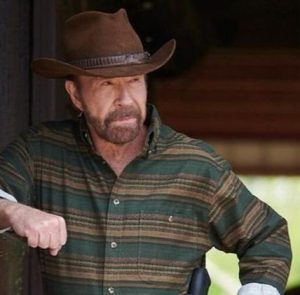
Chuck Norris of course! 

Chuck Norris

Let’s do some comparisons. 

David’s Mighty Men

While David was a mighty warrior in his own right, he surrounded himself with other mighty warriors. They supported David both politically and militarily. They had impressive combat skills and we fiercely loyal that won them renown and honour in David’s kingdom. 

  • They were a combination of combat commandos, stealth rangers, navy seals, green beret, special ops and Delta forces who had acquired the skills of battle demanded to survive and conquer in hand-to-hand warfare.
  • They engaged in clandestine operations and were often outnumbered by staggering odds pitted against them, yet they stood their ground. Time after time on fields of battle they were the last men standing. 
  • As you study these men, you will see confidence, faithfulness, determination, courage, faith, loyalty, dependability and more! 
  • They were bowmen and could shoot arrows and sling stones with either the right or the left hand; they were Benjaminites, Saul’s kinsmen. 1 Chronicles 12:2
  • A group of 37 men in the Hebrew Bible who fought with King David. 
  • The Three
    • Ishbaal the Tachmonite (“thou will make me wise”); the leader and is said to have killed 800 men in a single encounter. 2 Samuel 23:8. He was chief of the three. 
    • Eleazar (“God has helped”); stood his ground against the Philistines at Pas Dammim when the rest of the Hebrews ran away, and successfully defeated them. 2 Samuel 23:10
    • Shammah; When the Philistines banded together at a place where there was a field full of lentils, Israel’s troops fled from them. 12 But Shammah took his stand in the middle of the field. He defended it and struck the Philistines down, and the Lord brought about a great victory. 2 Samuel 23:11-12
    • One day during harvest, the Three parted from the Thirty and joined David at the Cave of Adullam. A squad of Philistines had set up camp in the Valley of Rephaim. While David was holed up in the Cave, the Philistines had their base camp in Bethlehem. David had a sudden craving and said, “Would I ever like a drink of water from the well at the gate of Bethlehem!” So the Three penetrated the Philistine lines, drew water from the well at the gate of Bethlehem, and brought it back to David. But David wouldn’t drink it; he poured it out as an offering to God, saying, “There is no way, God, that I’ll drink this! This isn’t mere water, it’s their life-blood—they risked their very lives to bring it!” So David refused to drink it. This is the sort of thing that the Three did. 2 Samuel 23:16 (MSG). The story shows the love and devotion of the three mighty warriors for David. 
  • The Thirty
    • Abishai; killed 300 men with a spear, and so became famous among The Thirty, though not as famous and respected as The Three
    • Benaiah; Killing two of Moab’s best warriors, Killing a lion in a pit on a snowy day & Attacking a 7 1/2 foot tall Egyptian with a club, stealing the spear that the Egyptian was using, and killing the Egyptian with it. 2 Samuel 23:20–23
  • The Mighty Men were the Special Operations Group of David’s armed forces. 

Chuck  Norris

There are so many Chuck Norris memes to draw from, but I want to look at the man himself. Chuck Norris is famous as a world-champion martial artist (tang soo do, tae kwon do and karate), plus movie and television star. What many people don’t know is that Norris is also very dedicated to the military community. 

  • He does his own stunts. 
  • Great movies with lots of actions. 44 movies and TV shows according to IMDB.com. 
  • He hasn’t lost a fight since 1968, giving him a record of 168-10-2 at the end of his long career. 
  • Usually plays heroes who are good guys to the bone, and despite having punishing martial arts skills, would always rather find a better solution than fighting.
  • His beard & red hair
  • Action movies, uses taekwondo in his fight scenes, does a roundhouse kick whenever he’s filming a martial arts fight
  • Calm, reasonable voice (that I am sure makes people tremble)
  • 6-time World Karate Champion
  • He was the karate teacher of father-son actors Steve McQueen and Chad McQueen
  • Received “Veteran of the Year 2001” honor at the 6th Annual American Veteran Awards.
  • He has founded two of his own martial arts: Chun Kuk Do (“the Universal Way”) and American Tang Soo Do.
  • He has a 10th degree black belt in Tang Soo Do, and also an 8th degree black belt in Tae Kwon Do…that is, the Korean (or traditional) styles of each. Is a Black Belt in Brazilian Jiu Jitsu under the Machado Brothers.
  • He and his wife both serve on the board of the National Council of Bible Curriculum in Public Schools.
  • In 2005 he founded the World Combat League, a full-contact, team-based martial arts competition.
  • While serving in Japan with the US Air Force (as an MP), Norris sought out a judo studio. He settled for karate classes, because judo would have conflicted with his Air Force duty schedule.
  • When Chuck Norris is silent around you, you should be worried. 
  • Norris would turn to philanthropy to help at-risk children build up self-esteem. Through Kickstart Kids and the United Fighting Arts Federation, Norris makes use of martial arts classes as an opportunity for children to avoid drug use and gang violence.
  • Alleged Chuck Norris Facts (okay, I had to include some of these… enjoy) 
    • Chuck Norris was once bitten by a cobra. After five days of agonizing pain, the cobra finally died.
    • Chuck Norris once shot down a German fighter plane by pointing at it and yelling “Bang!”
    • Before the Boogie Man goes to sleep, he checks his closet for Chuck Norris.
    • Chuck Norris can divide by zero.
    • When Chuck Norris does a push up, he isn’t lifting himself up, he’s pushing the Earth down.
    • Chuck Norris can slam a revolving door.
    • Chuck Norris has never blinked in his entire life. Never. 
    • Chuck Norris counted to infinity—three times.

Feel free to draw your own conclusion of who wins between David’s Mighty Men and Chuck Norris. I’m going to call it a tie. I also considered Navy Seal Team Six for a comparison, but that’s another blog. 

“I’ve always found that anything worth achieving will always have obstacles in the way, and you’ve got to have that drive and determination to overcome those obstacles on route to whatever it is that you want to accomplish.” Chuck Norris

Marriage Takes WORK!!

Great marriage don't just happen. FamilyLife CanadaYou have to give 100% to each other. 

Advice from grandma on Hallmark’s Cranberry Christmas; It’s tough, a lot of the time. You have no idea what to do. And there’s a big learning curve.  The stakes are high. Marriage isn’t easy and the rookie mistake is thinking it aught to be. It takes work. 

  1. Express what you’re thinking because they can’t read minds 
  2. Admit your shortcomings because they are obvious anyway. 
  3. Do the work, because making a marriage last, fighting for your love is the most beautiful and challenging and terrify and worthwhile work you will ever do!

There are many factors that contribute to a satisfying marriage relationship such as love, commitment, trust, time, attention, good communication including listening, partnership, tolerance, patience, openness, honesty, respect, sharing, consideration, generosity, willingness & ability to compromise, constructive management of disagreements or arguments, willingness to see another’s viewpoint, ability and willingness to forgive & apologize, fun.

The list is simple and obvious yet it can be very difficult for individuals/couples to restore their marriage relationship to a satisfying one when difficulties arise or when they drift apart. 

Great marriage don’t just happen. FamilyLife Canada

Widji – The Ultimate Career Prep

Working at camp is a real job, just ask anyone who has spent a summer here! There’s lots of great value for a staff member to work at camp, and if the Prime Minister can go on to be in that position after working at camp, we know at very least, it won’t stop you from going where you want, but here’s some reasons it will help you get there! 

The last thing staff are thinking about as they are running, dancing, jumping, singing and playing at camp is what they want to be when they grow up. But Camp Widjiitiwin parents know the things young adults experience and learn can directly impact the adults that they become. Spending a summer (or a few) to work at camp promotes valuable life skills in campers that prepare them to enter the professional world.

Teamwork

One of the biggest benefits of camp is that staff learn how to work together as a team. Staff at all levels lead by example and demonstrate practical communication skills, compromise, and listening skills. Staff learn to trust and encourage each other. Those who feel confident working with others at camp build a solid foundation for teamwork in the workplace. Working with a co-cabin leader teaches valuable lessons both in teamwork and problem-solving. Although your co-cabin leaders are close to your age, each individual possesses their own unique skill set. This diversity presents the opportunity for understanding and appreciating different cultures, working with varied experience levels and finding a common ground to resolve conflicts and effectively problem-solve. 

professional development Time Management

Time management is another important skill staff learn without even realizing it. Staff learn to factor in things like travel time between activities or how much prep time is required between events. Learning the importance of being on time or early will help campers be successful in the real world. They’re also given opportunities to extend grace and courtesy to those who are running behind, and taught to exercise patience when things don’t always go according to plan. Staff learn to be flexible and understanding, while also learning how to prioritize important events during their daily routine.

Spending a summer at camp is one of the best things you can do for the future of your child. It’s a fun way to build character and prepare children for the real world. Staff learn valuable life lessons on a daily basis at camp, all while having the best summer of their lives. The directors focus on developing the whole staff member, and embrace the opportunity to prepare each staff for success. When they eventually enter the workforce, staff will be prepared with the confidence and skills required to be successful.

Recognizing Individuality

Living in a cabin day-in and day-out with campers and co-cabin leaders is a unique experience. As a cabin leader, you’re presented with the task of nurturing each individual camper in order to establish strong relationships and ensure a safe and fun environment for all. The ability to recognize the strengths and weaknesses of each individual is a valuable skill in any profession. The environment at camp allows cabin leaders to discover the best version  of themselves. This environment of acceptance fosters the development of each cabin leader’s confidence and skill set. With higher confidence comes clearer decision making, better communication and stronger performance in many areas of life.

develop leadership skillsBecoming a Leader

The combination of the skills learned as a camp counselor include communication, problem-solving, flexibility, individuality and confidence, all of which are key factors in being successful in any workplace. When faced with the decision to apply for an internship or a counselor at a overnight camp, take into consideration that in just eight weeks, skills will be developed that are beneficial for life.

At camp, you’re both a coach and a mentor to the campers in your cabin,  but also to the rest of the children at camp. Camp transforms cabin leaders into leaders with the drive to be successful. The confidence established at camp can be carried over to all aspects of life; from going on a job interview to giving a presentation to your boss — having confidence allows for the highest success rate. 

Never before have people needed to be effective communicators, collaborators and think creatively than today. Employers look for these traits which can be developed at camp. Come join us for a season and find out for yourself.  

You Never Learn Anything While You’re Talking

“You never learn anything while you’re talking,” Joan Batura.

I borrowed this title from Paul Batura’s article about his mom’s recipe box. Side note: I have my mom’s and grandma’s recipes. Some of which I now make and deliver to my mom in pint jars. 

Listen twice as much as you talk. It would seem that since God designed us with two ears and only one mouth he meant for us to listen more than talk. James 1:19 says, “Know this, my beloved brothers: let every person be quick to hear, slow to speak, slow to anger.” We have two ears and one mouth so that we can listen twice as much as we speak – Epictetus. 

Most people don’t listen while they are in conversation, they are preparing for what they are going to say next. “The biggest communication problem is we do not listen to understand. We listen to reply,” Stephen Covey. Instead, we should be practicing active listening where you are concentrating intensely on what the other person has to say and seeking to understand it. In order to be a good listener, we first need to learn how to be silent. That includes, not thinking about how you’re going to reply when another person is talking. 

Even though you might have a lot to say, sometimes it’s best not to respond. In silence, without distractions, that’s when people feel respected and appreciated. People don’t care about how much you know, until they know how much you care.

The Bible talks a lot about the use of our tongues, the words we use and the way we say them. Here are some great examples.

James 3:5-8 talks about the tongue saying – So also the tongue is a small member, yet it boasts of great things. How great a forest is set ablaze by such a small fire! And the tongue is a fire, a world of unrighteousness. The tongue is set among our members, staining the whole body, setting on fire the entire course of life, and set on fire by hell. For every kind of beast and bird, of reptile and sea creature, can be tamed and has been tamed by mankind, but no human being can tame the tongue. It is a restless evil, full of deadly poison. 

Proverbs 12:18 – “There is one whose rash words are like sword thrusts, but the tongue of the wise brings healing.” As children of God, our tongues have a lot of power. Proverbs 18:21 confirms this by saying, “Death and life are in the power of the tongue, and those who love it will eat its fruits.”

Proverbs 15:1 A gentle answer turns away wrath, but a harsh word stirs up anger. The tongue of the wise commends knowledge, but the mouth of the fool gushes folly.

Psalm 39:1 of David, I said, “I will watch my ways and keep my tongue from sin; I will put a muzzle on my mouth while in the presence of the wicked.

Proverbs 18:4 A person’s words can be life-giving water; words of true wisdom are as refreshing as a bubbling brook.

Proverbs 13:3 Whoever guards his mouth preserves his life; he who opens wide his lips comes to ruin.

Forrest Gump’s Mama always said, “God gave you two ears and one mouth for a good reason. He meant for you to listen twice as much as you talk.” 

Jesus Returns to Nazareth

Jesus, Joseph and Mary return to NazarethReturn to Nazareth

by Ray Fowler (used with permission) 

This is the capstone of the Christmas story. Jesus was a Nazarene! He lived in humility, he was raised in obscurity, he suffered contempt – all so that we could be brought into the family of God. What a wonderful Savior!

Even though Advent and Christmas are over, we still have one passage left in our Christmas story from Matthew. When we last left Joseph and Mary, they were still living in Egypt awaiting further instructions. King Herod had tried to kill Jesus, but God had told Joseph to stay in Egypt until God told him otherwise. So there they were, living in Egypt, waiting for a fresh word from the Lord. And that word finally came in Matthew 2:19-23.

This final passage in Matthew is crucial to understanding what happened to Jesus after his birth. Remember, when Jesus was born in Bethlehem, there was a star in the sky for all to see. Magi from the east came to worship him. Herod wanted to kill him. All of Jerusalem knew that he had been born. This child was a celebrity! Surely with such miraculous and tumultuous beginnings, Jesus was destined to grow up famous.

Now, we said each of these places associated with Christ had an important Biblical meaning. Jerusalem was the center of worship and power. Bethlehem was the birthplace of the Messiah. Egypt was the place of bondage and slavery. Israel was the land of promise. So what was Nazareth?

Nazareth was nothing! It is not even mentioned in the Old Testament. It is a tiny town located in the hills of Galilee about 80 miles north of Jerusalem. No one important ever came from Nazareth. No great events ever took place there. No great buildings adorned its landscape. There was no downtown Nazareth. It was sticksville. It was poor people living in poor surroundings surrounded by poor circumstances. And it is exactly where God chose for Jesus to be raised.

Nazareth stood for three things in Jesus’ life: humility, obscurity and contempt. First of all, humility. Jesus was born in humble surroundings, and he was raised in humble surroundings. He was born King of the Jews! He should have been raised in a palace in Jerusalem, but instead he was raised in the humble town of Nazareth. Jesus was raised in humility.

Secondly, Nazareth stood for obscurity. Jesus had a high-profile birth in Bethlehem, but he lived a low-profile life in Nazareth. For thirty years Jesus would labor in obscurity as the son of a carpenter. For thirty years the Son of God who created the universe would work and eat and play in a small town on the corner of nowhere. Jesus was raised in obscurity.

Thirdly, Nazareth stood for contempt. When Jesus finally began his public ministry and people found out he was from Nazareth, they were not impressed. Trust me, you did not want Nazareth on your resume. When Philip told Nathanael he had found Jesus of Nazareth, Nathanael responded with utter contempt: “Nazareth! Can anything good come from there?” Nathanael asked. (John 1:46) Jesus was raised in a place that stood for humility, obscurity and contempt.

So why did God do this? Why did God choose Nazareth for Jesus’ hometown? We find the answer in the second half of verse 23: So was fulfilled what was said through the prophets: “He will be called a Nazarene.” (Matthew 2:23b) It was to fulfill Scripture.

Now Jesus was most certainly called a Nazarene. Throughout his life he was not known as Jesus of Bethlehem or Jesus of Jerusalem but rather Jesus of Nazareth. When Jesus died on the cross, Pilate put up a sign saying: “Jesus of Nazareth, The King of the Jews.” (John 19:19) When Jesus rose from the dead and ascended to heaven, the apostles continued to preach him as Jesus of Nazareth, crucified and raised from the dead. (Acts 4:10) And when Jesus spoke to Paul from heaven, he even took the name upon his own lips when he said, “I am Jesus of Nazareth, whom you are persecuting.” (Acts 22:8)

Foretold by the prophets (Judges 13:5; Isaiah 11:1; Jeremiah 23:5; Isaiah 53:2-3). So Jesus was most certainly called a Nazarene. He was identified with Nazareth in his life, death, resurrection and ascension. He would forever be associated with Nazareth. The question becomes, where in the Old Testament was this prophesied? Because you might remember we said earlier that the town of Nazareth is not even mentioned in the Old Testament. And indeed this particular phrase: “He will be called a Nazarene,” never appears in Old Testament Scripture. So what prophecy is Matthew referring to?

Some people suggest that this was an unwritten prophecy that had been passed down verbally, but I don’t find that convincing. Matthew always seeks to ground the life of Jesus in Scripture.

Notice that Matthew does do something differently with this quote. Usually when he quotes the Old Testament he says, “This was to fulfill what the prophet said,” where he uses the singular word “prophet,” or sometimes he even names the prophet, such as “This is what the prophet Isaiah said.” But here the reference is much more general: “So was fulfilled what was said through the prophets.” Notice how he uses word “prophets” here; he uses the plural word. And so Matthew is not thinking so much of one specific prophecy in Scripture as a general revelation about Jesus that was present in a number of prophecies in the Old Testament.

So what were these prophecies? Some people point to the similarity between the words “Nazareth” and “Nazirite” and see in these words a fulfillment of the word originally spoken about Samson in Judges 13:5: “You will conceive and give birth to a son … the boy is to be a Nazirite, set apart to God from birth, and he will begin the deliverance of Israel from the hands of the Philistines.” (Judges 13:5) Jesus was not a Nazirite, but he was certainly set apart to God from birth, and he worked a much greater deliverance than Samson.

Others see a similarity between the word “Nazareth” and the Hebrew word for “sprout” or “branch.” So Matthew may have been thinking about those prophecies which spoke of the Messiah as a Branch. There are six of these prophecies in the Old Testament – two in Isaiah, two in Jeremiah, and two in Zechariah. (Isaiah 4:2, 11:1; Jeremiah 23:5, 33:15; Zechariah 3:8, 6:13) Let me share just two of them with you here. Isaiah 11:1 – “A shoot will come up from the stump of Jesse; from his roots a Branch will bear fruit.” (Isaiah 11:1) And Jeremiah 23:5 – “The days are coming,” declares the Lord, “when I will raise up to David a righteous Branch, a King who will reign wisely and do what is just and right in the land.” (Jeremiah 23:5)

And then there are those prophecies that spoke of Jesus coming quietly and humbly. I think of Zechariah 9:9: “See, your king comes to you, righteous and having salvation, gentle and riding on a donkey.” Or there is Isaiah 53 which speaks not only of humility but also of derision and contempt: “He grew up before him like a tender shoot, and like a root out of dry ground. He had no beauty or majesty to attract us to him, nothing in his appearance that we should desire him. He was despised and rejected by men, a man of sorrows, and familiar with suffering.” (Isaiah 53:2-3)

So what did these prophecies tell us? That the Messiah would come humbly and quietly. Like a branch or a shoot out of dry ground there would be nothing remarkable about him to draw our attention to him. In fact we would treat him with contempt, as if he were less than nothing. In other words, we would treat him exactly like someone who was raised in the dirt town of Nazareth.

Jesus came not only to be with us but to become like us. And the beautiful truth we learn from these verses is that Jesus came not only to be with us but to become like us. There are two prophetic names given to Jesus here in Matthew – one at the end of chapter one, and another here at the end of chapter two. At the end of chapter one Jesus is called “Emmanuel” which means “God with us.” (Matthew 1:23) And at the end of chapter two he is called a Nazarene, which means he has become one like us. (Matthew 2:23)

“God with us” is a beautiful truth, but God can be with us and still separate from us. God was with Israel in the wilderness, but he was not like Israel. He was highly exalted in the flame and the cloud, and he dwelt in the tabernacle apart from men.

But the beautiful truth of this passage is that God is not only with us, he became like us. He became one of us. Jesus was God in the flesh, incognito, undercover. There was nothing about his appearance to signal to you that he was God – no shimmering halo, no other-worldly glow. His feet walked in the dust, and his hands gathered blisters.

He was an ordinary person like you and me. He was raised in an ordinary town, and lived an ordinary life, far from the power center of Jerusalem, far from his birthplace in Bethlehem. He lived in obscurity. He was not known as Jesus of Bethlehem, which would have had Messianic implications, but Jesus of Nazareth, a term filled with contempt. He made himself nothing and became a servant for us. He was a man of sorrows, familiar with suffering. He who was born a King was raised a Nazarene.

And as Jesus lived in humility, so he died in humility. He humbled himself and become obedient to death, even death on a cross. The meaning of the Nazarene passage is that Jesus became a nobody so you could be somebody. Jesus became like us so we could become like him. He made himself of no reputation, so that you could be known as a child of God – holy and righteous, destined for glory.

Thank God for Jesus the Nazarene!

© Ray Fowler. Website: http://www.rayfowler.org

Find the full text at www.rayfowler.org/sermons/matthew/the-nazarene

The Apostles’ Creed

Apostles’ Creed

I remember reciting the Apostles’ Creed a kid and youth in church. We have gotten away from this type of reading or recitation and I think we have lost something in our modern churches. Many Christians throughout history have used the Apostles’ Creed as a proclamation of their own faith. 

The Apostles’ Creed was composed as a direct response to heresy in defense of the gospel and the Christian faith. It was intended to articulate the essentials of the Christian faith against a backdrop of heresy, specifically Gnosticism which denied the divine creation, the incarnation of Christ, the deity of Christ and salvation by faith in Christ alone.

I have also included the Nicene Creed and This I Believe (The Creed) by Hillsong Worship below. 

The Apostles’ Creed

I believe in God, the Father almighty,
     creator of heaven and earth.

I believe in Jesus Christ, his only Son, our Lord,
     who was conceived by the Holy Spirit
     and born of the virgin Mary.
     He suffered under Pontius Pilate,
     was crucified, died, and was buried;
     he descended to the dead.
     The third day he rose again from the dead.
     He ascended to heaven
     and is seated at the right hand of God the Father almighty.
     From there he will come to judge the living and the dead.

I believe in the Holy Spirit,
     the holy catholic church,
     the communion of saints,
     the forgiveness of sins,
     the resurrection of the body,
     and the life everlasting. Amen.

A modern version is in the song, This I Believe (The Creed) by Hillsong Worship 

Our Father everlasting
The all creating One
God Almighty
Through Your Holy Spirit
Conceiving Christ the Son
Jesus our Saviour

I believe in God our Father
I believe in Christ the Son
I believe in the Holy Spirit
Our God is three in One
I believe in the resurrection
That we will rise again
For I believe
In the Name of Jesus

Our Judge and our Defender
Suffered and crucified
Forgiveness is in You
Descended into darkness
You rose in glorious life
Forever seated high

I believe in You
I believe You rose again
I believe that Jesus Christ is Lord

I believe in life eternal
I believe in the virgin birth
I believe in the saints’ communion
And in Your holy Church
I believe in the resurrection
When Jesus comes again
For I believe in the Name of Jesus

Songwriters: Crocker Matthew Philip / Fielding Benjamin David
This I Believe (The Creed) (Alternate Version/Live) lyrics © Hillsong Music Publishing Australia

Nicene Creed 

I believe in one God,
the Father almighty,
maker of heaven and earth,
of all things visible and invisible.

I believe in one Lord Jesus Christ,
the Only Begotten Son of God,
born of the Father before all ages.
God from God, Light from Light,
true God from true God,
begotten, not made, consubstantial with the Father;
through him all things were made.
For us men and for our salvation
he came down from heaven,

and by the Holy Spirit was incarnate of the Virgin Mary,
and became man.

For our sake he was crucified under Pontius Pilate,
he suffered death and was buried,
and rose again on the third day
in accordance with the Scriptures.
He ascended into heaven
and is seated at the right hand of the Father.
He will come again in glory
to judge the living and the dead
and his kingdom will have no end.

I believe in the Holy Spirit, the Lord, the giver of life,
who proceeds from the Father and the Son,
who with the Father and the Son is adored and glorified,
who has spoken through the prophets.

I believe in one, holy, catholic and apostolic Church.
I confess one Baptism for the forgiveness of sins
and I look forward to the resurrection of the dead
and the life of the world to come. Amen.